
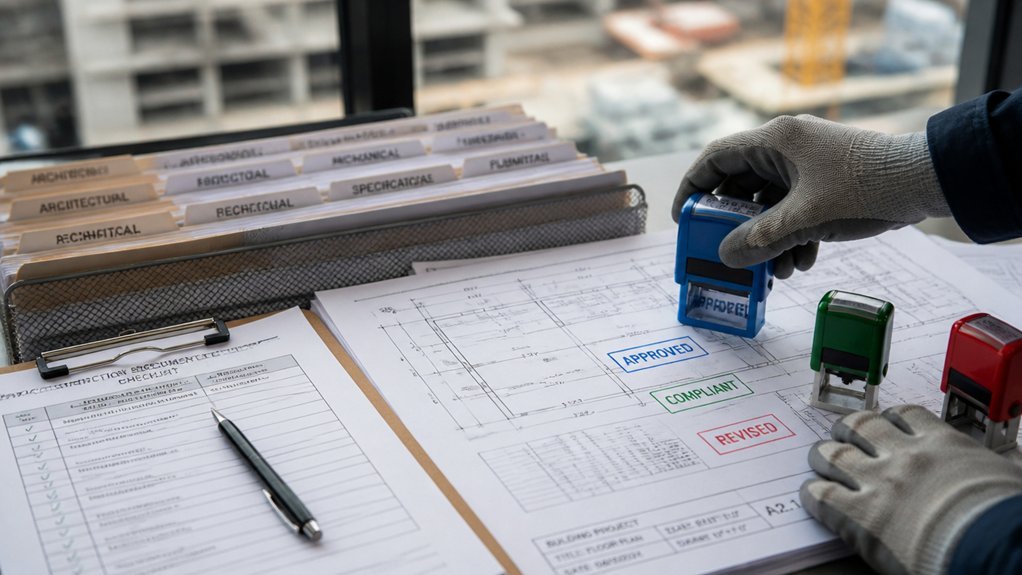
Submittal management sits at the heart of every well-run construction project. It’s the engine that keeps design intent intact, ensuring materials, equipment, and methods actually match what the drawings specify. Without it, teams risk installing the wrong products, missing code requirements, or facing expensive tear-outs down the line.
The process itself demands careful choreography. Contractors prepare formal documents—shop drawings, product data, samples—that prove their selections align with the design. Designers then review these submissions against specifications, often cycling back with corrections or rejections. Each round consumes calendar days, and in construction, time is rarely a luxury anyone holds in reserve.
Stakeholder coordination compounds the challenge. Architects, engineers, subcontractors, and suppliers all touch the submittal at different stages. Miscommunication between any two parties can stall approval, trigger cascading delays, or bury critical details in email threads. Successful teams build clear accountability into their workflows from day one.
What separates projects that hum along from those that lurch through revision cycles often comes down to discipline upfront. Organizations that invest in systematic preparation, realistic scheduling, and meticulous documentation typically see fewer rejections and faster approvals. The sections that follow explore how to build that operational muscle into your submittal practice.
What Is a Construction Submittal and Why It Matters

A construction submittal is a formal document package that contractors submit to project managers, architects, or engineers for review and approval before installing materials or equipment on site.
Submittals include product specifications, technical data sheets, samples, and installation instructions for items like windows, doors, HVAC units, and flooring materials.
Approval guarantees materials meet project requirements, building codes, and design specifications. Rejected submittals delay construction schedules and increase costs.
Proper submittal management prevents rework, maintains project timelines, and establishes a clear record of approved materials.
Contractors, architects, and inspectors use submittals to verify quality standards and maintain regulatory compliance throughout construction phases.
The Complete Submittal Process: Step-by-Step
Successful construction projects depend on organizing submittals in a logical sequence, beginning with the contractor’s initial preparation and ending with documented approval.
The contractor first compiles required documents, including product specifications, material samples, and installation details.
Next, the submittal moves to the design professional, typically an architect or engineer, who reviews compliance with project requirements.
The reviewer marks items as approved, approved with conditions, or rejected. Rejected submittals return to the contractor for revision and resubmission.
Once approved, the submittal receives formal documentation and becomes a project record.
This systematic process prevents delays, guarantees quality control, and maintains accountability throughout construction.
Why Submittals Get Rejected: Common Mistakes to Avoid
Despite following the submittal process correctly, contractors frequently encounter rejections due to preventable oversights.
Incomplete documentation represents a primary cause, with missing specifications, calculations, or certifications halting approval. Incorrect product selections fail to match contract requirements, creating compliance issues. Poor-quality images or drawings lack clarity needed for review.
Submittals arriving after deadlines miss approval windows entirely. Inadequate technical data omits performance specifications contractors should include. Vague descriptions confuse reviewers about material properties or installation methods.
Failing to address previous rejection comments repeats earlier mistakes. These errors delay projects, increase costs, and frustrate stakeholders, making careful attention essential.
Essential Documents Every Submittal Requires
Understanding what documents belong in a submittal package prevents the rejections detailed in the previous section. Every submittal requires product data sheets, specifications, and installation instructions relevant to the submitted item.
Shop drawings must include dimensions, materials, and connections specific to the project. Samples or photographs demonstrate color, texture, and finish quality.
Certification documents, warranties, and compliance certificates verify the product meets code requirements. Manufacturer information establishes credibility and technical support availability.
Testing reports and performance data substantiate claims. Schedule documentation shows delivery and installation timelines. Site-specific details address project conditions.
Organizing these documents clearly and completely reduces review time and approval delays considerably.
Submittal Timelines: Meeting Approval Windows Without Delays
Three critical factors determine whether submittals receive timely approval: submission date, review duration, and revision cycles.
Construction teams must submit materials well before deadline dates, allowing adequate time for architect or engineer review. Most reviewers require 5-10 business days for initial assessment.
Projects often experience delays when submittals arrive late or contain incomplete information. Establishing clear submission schedules prevents bottlenecks.
Teams should track approval windows using project schedules, noting that revisions typically require additional review time. Early submission buffers against unexpected complications, ensuring construction stays on schedule without approval-related delays.
Streamline Approvals With Submittal Management Software
Manual tracking systems create bottlenecks that delay approvals and extend project timelines. Submittal management software automates the approval process, organizing documents in centralized databases accessible to all stakeholders.
These platforms assign tasks to architects, engineers, and contractors, establishing clear deadlines and notification systems. Software like Touchplan or Bridgit tracks submission status, version control, and revision history automatically.
Digital workflows reduce email chains, prevent document loss, and provide audit trails for compliance. Automated reminders prompt reviewers to complete approvals promptly.
Real-time dashboards display project submittal status, enabling teams to identify bottlenecks quickly and maintain schedule adherence throughout construction phases.
Your Internal Submittal Checklist: Template and Best Practices
How can construction teams guarantee submittal completeness before sending documents to architects and engineers? An internal checklist addresses this need by verifying essential elements, including project specifications, material selections, equipment details, installation methods, and compliance documentation.
Teams should confirm that all drawings match current revisions, specifications align with contract requirements, and certifications accompany technical data. The checklist also examines whether submittals include manufacturer warranties, test reports, and quality assurance documents. Regular use prevents rejections, reduces approval delays, and saves time.
Construction managers benefit from standardized templates customized to project types, ensuring consistent quality across all submissions to design professionals.
Frequently Asked Questions
What Are the Legal Implications if a Contractor Proceeds Without Submittal Approval?
Proceeding without submittal approval exposes contractors to significant legal liability, including breach of contract claims, project delays, cost overruns, and potential removal of non-compliant work. This violation can result in disputes, financial penalties, and damaged professional relationships with project stakeholders.
How Do Submittals Differ Across Various Construction Project Types and Industries?
Remarkably, one would assume all buildings follow identical procedures—how naive. Commercial projects demand exhaustive documentation, while residential construction accepts abbreviated reviews. Industrial facilities require specialized certifications; healthcare settings necessitate rigorous compliance standards.
Can Submittals Be Resubmitted After Rejection, and How Many Times?
Yes, rejected submittals may be resubmitted after corrections are made. The number of resubmission cycles typically remains unlimited, though project specifications often establish guidelines requiring expedient revisions and timely resubmission to maintain schedule compliance.
Who Bears Financial Responsibility for Delays Caused by Submittal Rejections?
The contractor typically bears financial responsibility for delays caused by submittal rejections, as they control submission quality and timing. However, responsibility may shift to the owner if rejections result from unclear specifications or unreasonable requirements.
What Happens to Submittals if a Project Is Suspended or Cancelled?
Paused projects typically preserve pending submittals in provisional status, though they may be formally voided upon cancellation. Contractors generally cannot claim costs for unapproved submittals, and incomplete documentation is often discarded or archived indefinitely by project administrators.
Conclusion
Submittal management requires systematic preparation, timely submission, and thorough documentation review. Ironically, many projects experience delays despite having clear processes in place. Contractors who implement standardized templates, software tools, and internal checklists typically encounter fewer rejections and approval bottlenecks. Success depends on consistent adherence to established procedures, attention to specification details, and coordination among project teams. Effective submittal practices directly support regulatory compliance and project timelines.