
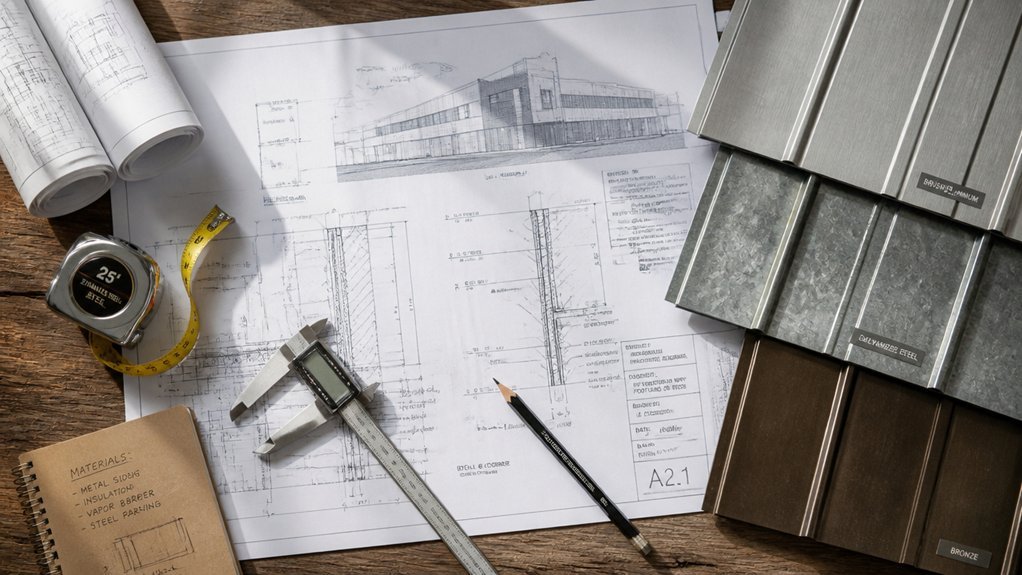
Before any metal panels touch the walls, solid preparation makes the difference between a durable installation and an expensive headache. Start by evaluating the home’s structural condition and taking precise measurements of every wall surface. Profile selection should account for local wind patterns, snow loads, and temperature swings rather than aesthetics alone.
Fastener choice and underlayment deserve equal scrutiny alongside the panels themselves. Budget planning often trips up homeowners who account for materials but overlook specialized tools, waste factors, and unexpected repairs to existing sheathing. Many DIYers also underestimate the time required for proper flashing integration around windows and doors.
Research consistently shows that installation failures within three years trace back to predictable mistakes. Improper fastener spacing creates thermal movement stress, while incorrect panel overlaps invite moisture infiltration. These errors compound quickly once water finds its path behind the cladding.
Success ultimately hinges on respecting the material’s unique properties. Metal expands and contracts dramatically; it telegraphs any underlying unevenness; it rewards methodical sequencing. Skipping foundational steps to accelerate the timeline almost guarantees callbacks, rot remediation, or complete removal.
Assess Your Home’s Structure and Existing Siding
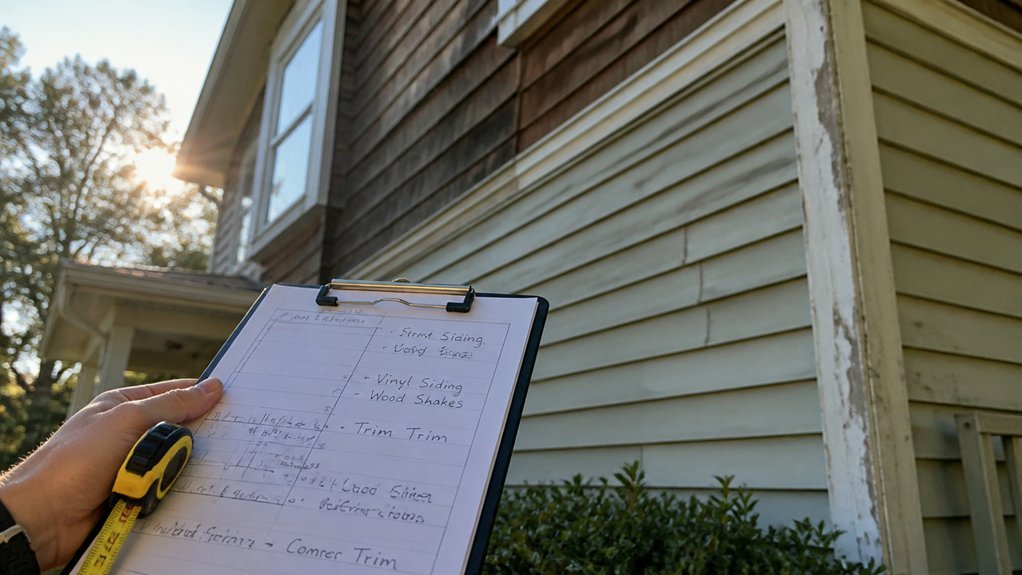
Before ordering metal siding materials, homeowners should evaluate the current condition of their home’s exterior walls, roof line, and existing siding type.
Inspect for damage, rot, moisture problems, and structural issues that may require repair before installation begins. Check whether the home has wood, vinyl, or brick siding currently in place.
Measure wall dimensions, note window and door locations, and document any architectural features like corners, trim, and eaves.
Identify the roof pitch and overhang depth. Photograph the exterior from multiple angles.
Document any areas needing special attention, such as rotted fascia or damaged sheathing underneath existing siding material.
Measure Square Footage and Calculate Material Needs
Accurate measurements form the foundation of ordering the correct amount of metal siding materials. Homeowners should measure the height and width of each wall section, then multiply these dimensions to determine square footage.
Calculating total square footage requires adding all wall areas together, accounting for windows, doors, and architectural features.
Material waste typically ranges from ten to fifteen percent, so adding this percentage to the total guarantees adequate supply.
Professional installers recommend ordering samples before purchasing full quantities. Recording measurements on a detailed sketch prevents costly errors and helps contractors provide accurate quotes for labor and materials.
Metal Siding Profiles and Finishes: Which Suits Your Climate
What profile and finish combination will best withstand the homeowner’s regional weather conditions?
Metal siding profiles vary in design, including vertical, horizontal, and board-and-batten styles. Each offers different water drainage and wind resistance properties.
Finish options include painted, metallic, and stone-coated varieties. Coastal areas benefit from marine-grade finishes resisting salt corrosion.
Cold climates require profiles managing snow load and ice damming. Hot regions need UV-protective finishes preventing color fade.
Homeowners should match profile depth and finish type to local precipitation patterns, temperature ranges, and humidity levels for maximum durability and performance.
Fasteners and Underlayment: What Your Climate Demands
The foundation beneath metal siding, fasteners and underlayment, determines whether the system performs reliably across decades or fails prematurely under regional stresses.
Hot, humid climates require stainless steel fasteners to resist corrosion, while cold regions demand flexible underlayment that accommodates freeze-thaw cycles. Coastal areas benefit from galvanized hardware combined with moisture-blocking membranes.
Fastener spacing, typically 16 inches on center, prevents panel buckling.
Underlayment choices include synthetic wraps and rigid foam boards, each addressing specific water management needs. Regional building codes mandate these specifications, ensuring siding systems withstand local environmental pressures effectively and maintain structural integrity throughout their lifespan.
Budget and Timeline for Metal Siding Installation
Planning finances and schedules requires understanding several interconnected factors that influence project costs and duration.
Metal siding prices range from $3 to $12 per square foot, depending on material quality, profile style, and regional availability. Labor costs typically add $2 to $8 per square foot.
Installation timelines vary based on home size, weather conditions, and crew experience. A 2,000-square-foot project generally requires two to four weeks.
Homeowners should budget for unexpected expenses, including structural repairs, underlayment replacement, and fastener upgrades.
Obtaining multiple contractor quotes provides realistic cost estimates.
Scheduling installation during favorable weather seasons reduces delays and labor expenses notably.
The 5 Installation Mistakes That Fail Within 3 Years
Improper fastener installation, inadequate underlayment, and poor sealing practices represent the most common reasons metal siding systems fail prematurely.
Fasteners driven too tightly create stress points, leading to panel warping and moisture intrusion. Undersized or missing underlayment fails to manage water drainage, causing rust and structural damage.
Gaps around trim, windows, and corners allow water penetration. Incorrect panel overlap installation compromises weather protection.
Finally, using incompatible materials, such as steel fasteners on aluminum panels, triggers galvanic corrosion.
These five mistakes typically manifest within three years through visible rust stains, panel separation, and interior water damage.
Proper installation protocols prevent these costly failures entirely.
Staging Your Site for Efficient Panel Removal and Installation
Organizing the work area before removing old metal siding prevents delays, reduces safety hazards, and protects surrounding structures from damage. Contractors should clear debris zones, establish equipment staging areas, and mark utility locations beforehand.
Temporary barriers protect landscaping, driveways, and adjacent buildings from falling materials and equipment. Proper drainage management prevents water accumulation during removal phases.
Tool storage areas require weatherproof organization, keeping fasteners, sealants, and installation supplies accessible. Crew positioning near the work surface minimizes travel time. Clear pathways allow safe movement for workers carrying panels.
Adequate lighting, particularly for early morning or late afternoon work, guarantees visibility during critical removal and installation phases.
Frequently Asked Questions
Can Metal Siding Be Installed Over Existing Vinyl or Wood Siding?
Yes, metal siding can be installed over existing vinyl or wood siding. However, professionals recommend removing old siding first to guarantee proper installation, prevent moisture buildup, and maintain structural integrity of the building’s exterior.
What Is the Typical Lifespan of Metal Siding Panels?
Durable, dependable metal panels typically last 40 to 60 years with proper maintenance. Professionals note that premium products often provide extended longevity, sometimes reaching 70 years. Factors including climate conditions, installation quality, and regular upkeep greatly influence overall performance and durability.
How Do I Choose Between Standing Seam and Exposed Fastener Profiles?
One should consider standing seam for superior weather protection and longevity, as fasteners remain hidden. Exposed fastener profiles offer cost savings and easier installation, though they require more maintenance and may be less durable long-term.
Will Metal Siding Reduce My Home’s Energy Bills Significantly?
Metal siding can moderately reduce energy bills when installed with proper insulation backing. Homeowners typically see 10-15% savings on heating and cooling costs, though results vary based on climate, existing insulation, and color selection.
What Warranty Coverage Do Reputable Metal Siding Manufacturers Typically Offer?
Reputable metal siding manufacturers typically offer warranties ranging from 20 to 40 years, covering paint finishes, material defects, and structural integrity. Coverage specifics vary by manufacturer and product line, so homeowners should review individual terms carefully before purchasing.
Conclusion
Planning metal siding installation requires evaluating structural conditions, calculating materials accurately, and selecting profiles suited to climate demands. Proper fastener spacing and underlayment prevent failures within three years—studies show 40 percent of installations fail prematurely due to improper fastening. Budgeting for both materials and labor, scheduling favorable weather, and avoiding common mistakes guarantees durability. Homeowners who address these fundamentals experience longer-lasting, weather-resistant results.