
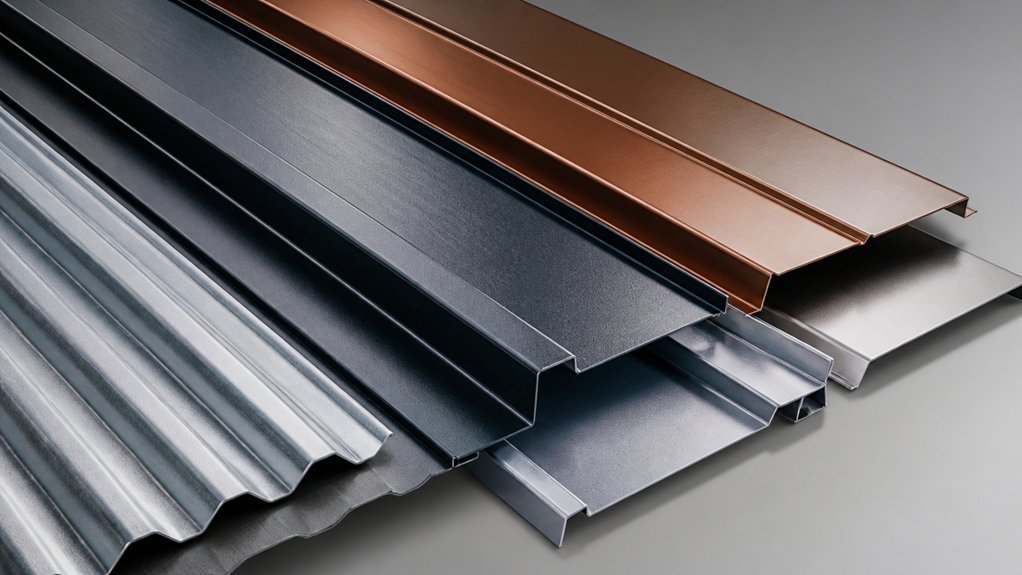
Metal siding panels shape project budgets in two key ways: profile type and gauge thickness. Standing seam panels typically run $3 to $15 per square foot. Corrugated options offer a more affordable range at $1.50 to $4.
Gauge thickness is measured in numbers, with lower numbers indicating thicker, sturdier metal. Thicker gauges stand up better to impacts and weather but come with higher price tags. Thinner gauges cost less upfront yet may require earlier replacement or repairs.
Finding the right pairing demands careful thought. Contractors and homeowners must weigh initial spending against how the building will be used and where it sits. A warehouse in a mild climate faces different demands than a coastal home battling salt spray.
The smartest choice rarely chases the lowest bid alone. Long-term maintenance schedules, expected lifespan, and performance needs all deserve a seat at the table. Spending more at the start sometimes prevents headaches years down the road.
Metal Siding Profiles and Gauges: Foundations
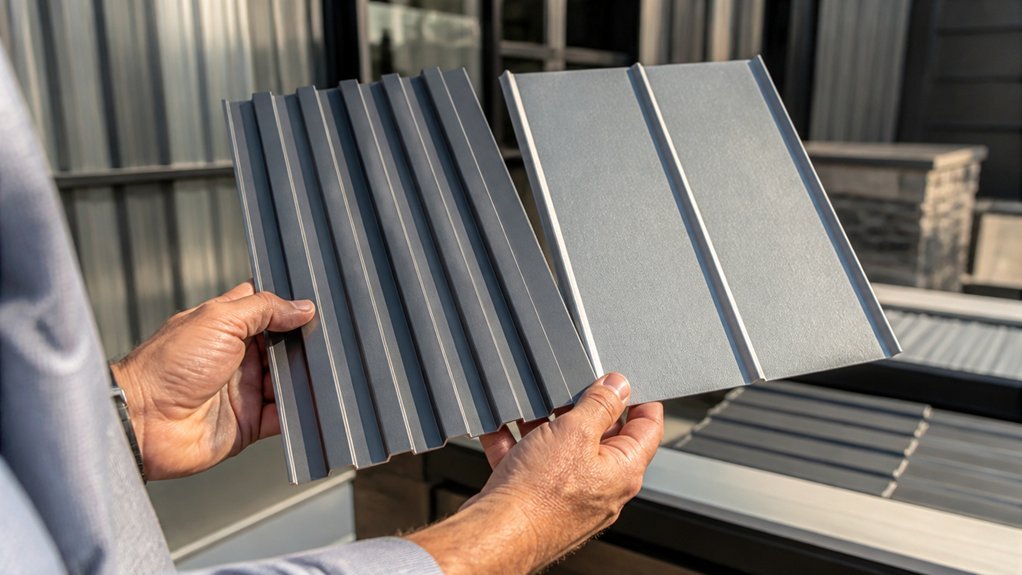
The structural foundation of metal siding systems rests on two critical specifications: profile design and material gauge.
Profile refers to the shape and pattern pressed into metal panels, affecting water drainage, structural strength, and aesthetic appearance. Common profiles include vertical ribs, horizontal lines, and embossed patterns.
Gauge measures metal thickness, typically ranging from 24-gauge to 29-gauge for residential applications. Thicker gauges provide greater durability and impact resistance, while thinner options reduce material costs.
Panel profiles and gauges work together to determine installation requirements, wind resistance ratings, and overall project expenses. Selecting appropriate combinations guarantees peak performance and cost efficiency.
Profile Types and What They Cost
Metal siding profiles vary widely in design, complexity, and price, with each type offering distinct advantages for different building needs.
Standing seam profiles, featuring vertical ribs and concealed fasteners, cost between $3 to $5 per square foot.
Corrugated panels, with wavy patterns, range from $1.50 to $3 per square foot, making them budget-friendly options.
Vertical board-and-batten styles run $2.50 to $4 per square foot.
Flat panel designs cost $2 to $3.50 per square foot.
More intricate profiles, including multi-rib or specialty patterns, typically exceed $4 per square foot.
Profile selection directly impacts material expenses and installation complexity.
Corrugated vs. Standing Seam: Which Fits Your Budget?
When comparing corrugated and standing seam metal siding, budget considerations often determine which profile makes sense for a particular project.
Corrugated panels typically cost less per square foot, ranging from $3 to $8, making them ideal for agricultural buildings and sheds. Standing seam panels, priced between $8 to $15 per square foot, offer superior weather protection and sleeker aesthetics for residential applications.
Installation costs vary greatly: corrugated requires simpler fastening methods, while standing seam demands specialized equipment and skilled labor.
Long-term maintenance expenses also differ, with standing seam needing less frequent repairs. Project type and longevity expectations should guide the selection.
Steel, Aluminum, and Copper Metal Siding: Material Costs Compared
Beyond profile selection, the base material chosen for metal siding panels greatly impacts both upfront expenses and long-term value.
Steel offers the lowest initial cost, typically ranging from $3 to $8 per square foot, but requires protective coatings to prevent rust.
Aluminum costs $4 to $10 per square foot, resists corrosion naturally, and demands minimal maintenance.
Copper represents the premium option at $15 to $25 per square foot, providing exceptional durability and developing a protective patina over time.
Budget-conscious projects favor steel, while homeowners seeking longevity often choose aluminum or copper despite higher material expenses.
What Your Metal Siding Project Actually Costs: Labor and Materials
Two major expense categories determine the total cost of a metal siding installation: materials and labor.
Material costs vary considerably based on metal type, gauge thickness, and panel profile chosen. Steel typically costs $3 to $8 per square foot, while aluminum ranges from $4 to $10 per square foot.
Labor expenses depend on regional rates, project complexity, and installation time. Professional installers generally charge $8 to $15 per square foot for labor.
Total project costs combining both categories usually fall between $11 and $25 per square foot installed.
Common Budget Mistakes That Inflate Metal Siding Expenses
Understanding the cost breakdown helps homeowners recognize where expenses spiral beyond initial estimates.
Common mistakes include underestimating labor complexity on steep roofs or irregular structures, which increases installation time and costs. Selecting cheap gauge materials, like 24-gauge instead of 26-gauge panels, leads to future denting and replacement expenses.
Ignoring site preparation costs, including removing old siding and fixing underlying damage, creates budget surprises.
Failing to account for trim, flashing, and fastener materials adds 15-20 percent to final bills.
Overlooking regional labor rate variations and seasonal pricing fluctuations results in significant overspending. Planning contingencies of 10-15 percent prevents financial strain from unexpected complications.
Choosing the Best Profile and Gauge for Your Project
What profile and gauge combination best suits a specific building structure? The answer depends on several factors, including climate, building height, and budget constraints.
Common profiles include vertical, horizontal, and architectural styles, each offering different aesthetic and functional benefits.
Gauge thickness ranges from 24 to 29, with lower numbers indicating thicker, more durable material. Thicker gauges resist denting and weather damage better but cost more initially.
For residential applications, 26 or 27 gauge with vertical profiles provides adequate protection and affordability.
Commercial buildings often require 24 gauge for enhanced durability.
Consulting local building codes and climate data guarantees superior selection for long-term performance and cost efficiency.
Frequently Asked Questions
How Long Do Metal Siding Panels Typically Last Before Requiring Replacement?
Metal siding panels typically last 40 to 60 years before requiring replacement. Their longevity depends on climate conditions, maintenance frequency, and installation quality. Proper care and regular inspections can extend their service life considerably beyond these estimates.
What Permits and Inspections Are Required for Metal Siding Installation Projects?
Most jurisdictions require building permits before metal siding installation begins. Inspectors typically examine structural integrity, proper fastening, flashing details, and compliance with local building codes. Final inspection approval guarantees the project meets safety standards and regulations.
Can Metal Siding Be Installed Over Existing Siding Materials?
Metal siding installation over existing materials is like layering armor upon armor. Yes, it can be installed directly over most existing siding, though proper preparation, moisture barriers, and structural assessment are essential to guarantee durability and prevent underlying decay complications.
How Do Climate and Weather Conditions Affect Metal Siding Performance?
Metal siding withstands extreme temperatures, high winds, and heavy precipitation effectively. Its durability varies by climate; coastal regions require corrosion-resistant coatings, while areas with temperature fluctuations demand proper expansion joint installation to prevent buckling and warping issues.
What Warranty Options Are Available for Metal Siding Panels?
Manufacturers typically offer warranties ranging from 20 to 40 years, covering paint finishes, rust perforation, and structural defects. Premium products may include lifetime warranties. Coverage varies by manufacturer and installation quality requirements.
Conclusion
Like a ship’s hull choosing between iron plating and lighter aluminum, metal siding projects require deliberate material selection. Thicker gauges provide stronger protection, yet cost more initially. Standing seam profiles offer longevity; corrugated options suit tighter budgets. Choosing wisely prevents future leaks and repairs, much as proper reinforcement prevents breaches. Balance upfront expenses against years of durability, ensuring your investment withstands weathering economically.