
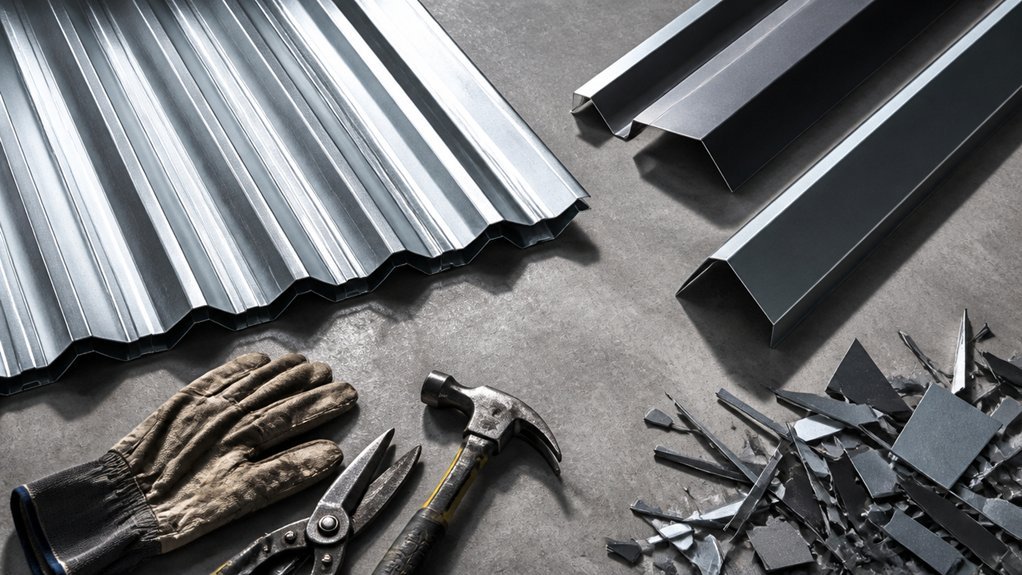
Metal roofing projects involve more than just the visible panels. Those panels typically run $5 to $12 per square foot, with prices swinging widely based on material choice. Standing seam systems command premium rates, while corrugated options sit at the lower end.
Beyond the panels themselves, trim pieces and fasteners add another layer of expense. Ridge caps, edge flashing, and specialized hardware often surprise first-time installers with their cumulative cost. Labor represents the largest variable, with installation rates varying dramatically by region and roof complexity.
Material waste deserves its own line item in any realistic budget. Industry standards suggest ordering 10 to 15 percent extra to account for cutting errors, damaged pieces, and odd angles around dormers or chimneys. Skipping this buffer leads to mid-project delays and color-matching headaches.
Final pricing depends on factors ranging from local permit requirements to seasonal demand for roofing crews. Breaking down each component separately helps homeowners avoid the sticker shock of a lump-sum estimate.
Panel Types and Pricing: Standing Seam vs. Metal Shingles vs. Corrugated
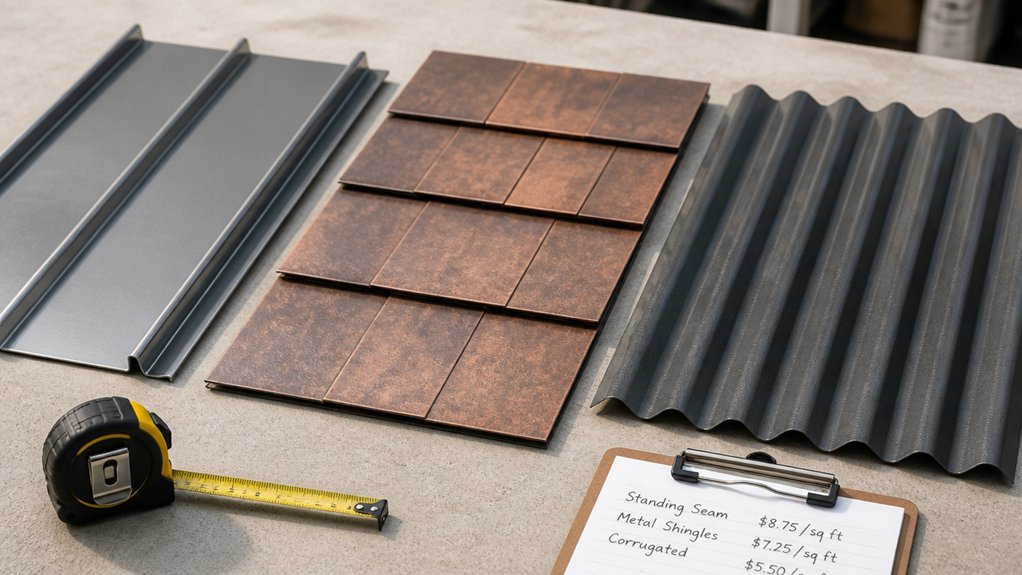
Metal roofing typically comes in three main panel types, each offering different price points and performance characteristics.
Standing seam panels, featuring interlocking seams, cost $8–12 per square foot and provide superior durability and weather resistance.
Metal shingles mimic traditional asphalt shingles, ranging from $7–11 per square foot, offering aesthetic appeal with moderate longevity.
Corrugated panels represent the most economical option at $5–8 per square foot, though they require more frequent maintenance and provide less weather protection.
Standing seam dominates commercial applications due to longevity, while homeowners often choose shingles for appearance.
Corrugated panels suit agricultural or industrial structures where cost minimization takes priority over aesthetic considerations and extended lifespan.
Metal Roofing Trim and Fastener Costs
Several components beyond the primary panels contribute greatly to the total installation expense of a metal roof.
Trim pieces, including ridge caps, edge flashings, and valley components, typically cost $1 to $3 per linear foot. Fasteners such as screws and clips range from $0.10 to $0.25 each, with costs varying by material grade and corrosion resistance.
Sealants and underlayment add another $0.50 to $1.50 per square foot. These secondary materials represent 10 to 15 percent of total project costs. Proper selection guarantees longevity and weather protection.
Contractors typically bundle trim and fastener expenses into labor estimates.
Metal Roofing Labor Costs: What You’ll Pay to Install
Installation labor represents a significant portion of total metal roofing expenses, often accounting for 50 to 60 percent of the overall project cost. Labor rates vary by region, ranging from $8 to $15 per square foot.
Factors affecting pricing include roof pitch, complexity, local market conditions, and contractor experience. Steep roofs require additional safety equipment and time, increasing costs.
Residential projects typically range from $3,000 to $8,000 in labor alone.
Experienced metal roofing installers command higher rates due to specialized skills. Obtaining multiple quotes from licensed contractors helps homeowners understand local pricing and make informed decisions about their projects.
Material Waste: Budget 10–15% Extra
Because metal roofing panels must be cut and fitted to accommodate roof edges, valleys, and penetrations like vents and chimneys, homeowners should expect material waste of 10 to 15 percent above their base material estimate. This waste accounts for trimmed edges, overlaps, and damaged pieces during installation.
For example, a roof requiring 2,000 square feet of panels might need 200 to 300 extra square feet. Contractors factor this into their quotes, though some homeowners overlook it during budgeting.
Planning for waste prevents unexpected costs and guarantees adequate material supply for the entire project.
What Affects Your Metal Roofing Cost: Pitch, Size, and Complexity
Beyond accounting for material waste, homeowners must understand the variables that directly impact their total metal roofing investment.
Roof pitch, measured in rise-to-run ratio, markedly influences labor costs and material requirements. Steeper pitches demand additional safety equipment, more time, and increased fastener usage.
Roof size determines overall material quantity needed, with larger square footage requiring proportionally more panels and trim.
Complexity factors include roof valleys, skylights, chimneys, and dormers, each requiring custom cuts and additional labor hours. Simple rectangular roofs cost considerably less than designs featuring multiple angles, penetrations, or architectural features requiring specialized installation techniques.
Metal vs. Asphalt: Cost and Value Over Time
While metal roofing requires a higher upfront investment than asphalt shingles, the long-term financial comparison reveals significant differences in durability, maintenance, and replacement cycles.
Metal roofs typically last 40-70 years, compared to asphalt’s 15-25 year lifespan. This longevity reduces replacement frequency and associated labor costs.
Asphalt shingles demand regular maintenance, including repairs and partial replacements. Metal roofing requires minimal upkeep, though periodic inspections prove beneficial.
Initial metal costs range from $8-14 per square foot installed, versus asphalt’s $3-5 range.
Over a 50-year period, metal roofing often proves more economical despite higher initial expenses, accounting for reduced maintenance and fewer replacements.
5 Ways to Lower Your Metal Roofing Budget
Given the substantial upfront cost of metal roofing, several strategies can reduce expenses without compromising quality or longevity. Homeowners can select simpler profiles, such as standing seam over architectural designs, to decrease material and labor costs.
Purchasing materials during off-season periods yields discounts from suppliers. Combining roofing projects with gutter installation or repairs spreads contractor fees across multiple jobs.
Obtaining multiple quotes from installers creates competitive pricing pressure. Finally, choosing standard colors rather than custom finishes avoids premium charges, reducing total project expenses while maintaining durability and weather protection.
Frequently Asked Questions
Do Metal Roofs Require Special Underlayment, and Does It Add to Total Costs?
Yes, metal roofs typically require specialized underlayment to prevent condensation and enhance durability. This additional material increases installation costs, though quality underlayment proves cost-effective long-term by extending the roof’s lifespan and improving thermal performance.
Are Permits and Inspections Required for Metal Roof Installation, and What Are Typical Fees?
Like a gatekeeper ensuring structural integrity, permits and inspections are required in most jurisdictions. Typical fees range from $300 to $1,000, varying by location and project scope. Local building departments determine final costs based on property assessment values.
How Long Do Metal Roofs Typically Last Compared to Their Initial Investment?
Metal roofs typically last 40-70 years, markedly outlasting asphalt shingles at 15-20 years. Though initial investment costs more, the extended lifespan and minimal maintenance requirements make them economically superior over time.
What Warranty Options Are Available for Metal Roofing, and Do They Affect Pricing?
Metal roofing manufacturers offer “peace-of-mind enhancements” ranging from limited lifetime coverage to standard ten-year protection plans. Premium warranty tiers substantially elevate initial costs, though extended coverage options justify the investment for long-term property protection.
Can Existing Asphalt Roofing Be Left Under Metal Roofing, or Must It Be Removed?
Existing asphalt roofing can typically remain underneath metal roofing, provided the substrate is structurally sound and properly prepared. However, removal is often recommended to reduce weight, improve ventilation, and prevent moisture accumulation issues.
Conclusion
Metal roofing projects require careful budget planning across panels, trim, labor, and waste. Labor typically consumes 50 to 60 percent of total costs, making it the largest expense component. Homeowners should anticipate 10 to 15 percent material waste when calculating budgets. Panel selection, roof pitch, and installation complexity all influence final pricing. Understanding these factors enables property owners to make informed decisions and allocate resources effectively for their roofing projects.