
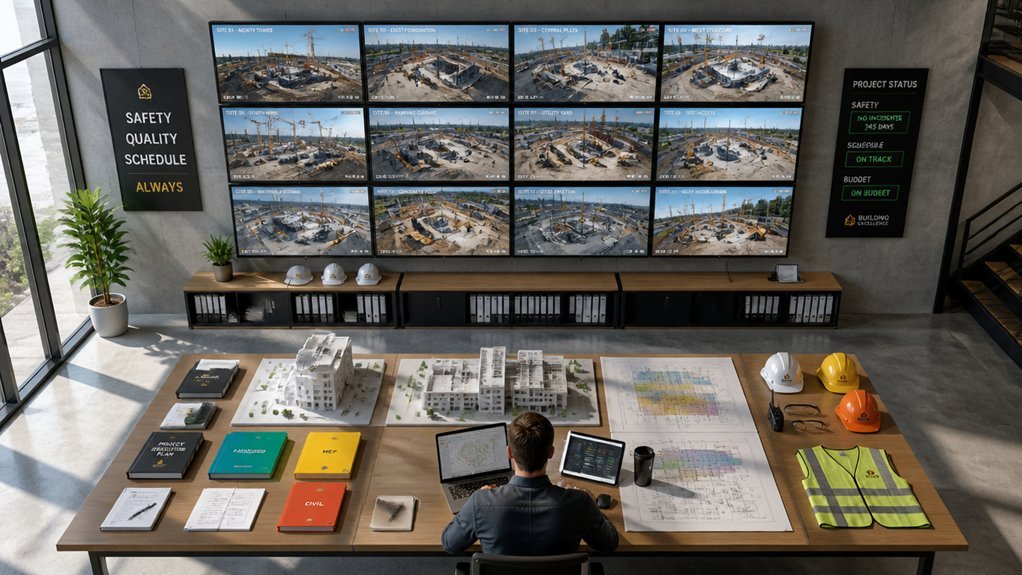
Managing multiple construction projects demands more than just good intentions—it requires a disciplined framework that keeps everything moving forward. A well-designed priority matrix becomes essential, ranking each project by urgency and potential impact so resources land exactly where they’re needed most.
Uniform project management platforms like Asana or Monday.com create consistency across dispersed teams. When everyone tracks schedules and budgets through the same system, misunderstandings decrease and transparency improves. Clear role assignments further strengthen this foundation, establishing direct accountability at every level of operation.
Yet the deeper difficulty lies in striking balance. Standardizing processes ensures quality and efficiency, but rigidity can stifle the adaptability that construction demands. Teams must navigate this tension carefully, building systems robust enough to guide work while flexible enough to accommodate site-specific challenges and unexpected developments.
Start With a Priority Matrix to Rank Your Projects

Multiple construction projects demand careful ranking to allocate resources effectively. A priority matrix organizes projects by urgency and importance, helping managers decide which deserve immediate attention. Projects are plotted on a grid with two axes: deadline pressure and business impact.
High-priority projects requiring quick completion receive funding, personnel, and equipment first. Medium-priority projects proceed with available remaining resources. Low-priority projects experience delays or temporary halts.
This ranking system prevents resource conflicts, reduces scheduling bottlenecks, and guarantees completion of critical work. Regular matrix reviews accommodate changing deadlines and client needs, keeping project management responsive and efficient throughout construction cycles.
Pick a Project Management Tool and Stick With It
Once projects are ranked by priority and impact, construction managers need a single platform to track schedules, budgets, and team assignments across all active work. Popular options include Procore, Monday.com, and Asana, each offering different features for resource management.
Switching between multiple tools creates confusion, delays communication, and increases errors. Managers should evaluate tools based on team size, budget complexity, and reporting needs.
After selection, consistent use across all projects enables accurate data tracking, reduces duplicate entries, and improves decision-making.
Training staff on the chosen platform guarantees adoption and maximizes its effectiveness for ongoing operations.
Assign Clear Roles and Hold Site Teams Accountable
Defining specific responsibilities for each team member prevents confusion, reduces duplicated work, and establishes clear expectations on job sites. Project managers should designate a site supervisor, safety officer, and crew lead for each location.
Written job descriptions clarify who handles scheduling, inspections, and equipment maintenance.
Regular accountability meetings, held weekly or bi-weekly, track progress and address delays. Documentation systems record task completion and performance metrics.
When workers understand their duties and consequences for incomplete work, projects stay on schedule. Clear role assignment also enables faster decision-making and reduces costly miscommunication across multiple concurrent sites.
Run the Same Playbook Across Every Project
Standardized processes create consistency across all job sites, reducing errors and improving efficiency. Implementing identical checklists, safety protocols, and scheduling methods guarantees teams follow the same approach regardless of project location or size.
For example, using the same daily standup format, equipment maintenance schedule, and quality inspection procedures allows managers to quickly identify problems and deploy solutions. When every project operates from the same playbook, staff move between sites smoothly, new employees onboard faster, and communication becomes clearer.
Documented procedures eliminate confusion about expectations, deadlines, and responsibilities across multiple concurrent projects.
Track Resources, Budget, and Cash Flow Weekly
Financial visibility across multiple construction projects requires weekly tracking of resources, budget allocations, and cash flow movements. Project managers should monitor labor costs, material expenses, and equipment rentals against planned budgets.
Weekly reports reveal spending patterns, identify overspending early, and highlight cash shortages before they create problems. Comparing actual expenses to projected costs helps managers adjust schedules or reduce scope as needed.
Cash flow tracking guarantees sufficient funds exist for payroll, supplier payments, and equipment leases. Using spreadsheets or project management software streamlines data collection.
Regular reviews with accounting and site supervisors maintain accuracy, prevent budget overruns, and support informed decisions across all active projects.
Keep Owners, Crews, and Vendors Aligned Daily
While weekly financial tracking provides the foundation for project control, daily communication guarantees that owners, crews, and vendors operate from the same information and expectations.
Morning briefings address schedule changes, material deliveries, and safety concerns across all active sites.
Project managers should distribute updated plans, clarify task priorities, and confirm resource availability through email, texts, or job site meetings. Regular check-ins prevent misunderstandings about specifications, timelines, and responsibilities. Documented communications, via shared platforms or simple logs, create accountability records.
When owners understand progress, crews know their assignments, and vendors confirm delivery dates, projects proceed with fewer delays, disputes, and costly rework.
Review Progress Weekly and Pivot When Needed
Every seven days, project managers should review actual progress against planned schedules, budgets, and quality benchmarks across all active projects. This weekly assessment identifies delays, cost overruns, and quality issues before they escalate.
Managers compare completed work to timelines, check spending against estimates, and verify that work meets specifications. When discrepancies appear, adjustments become necessary. Crews may need reallocation, suppliers may require expediting, or schedules may need extension.
Documentation of these changes guarantees all stakeholders understand revised expectations. Regular pivoting prevents small problems from becoming major setbacks across the entire portfolio of construction work.
Frequently Asked Questions
How Do I Handle Scope Creep When Managing Multiple Construction Projects Simultaneously?
A project manager should establish clear written contracts defining project boundaries before work begins. Regular change order procedures, client communication protocols, and documented approval processes help prevent unauthorized modifications across simultaneous projects.
What’s the Best Way to Allocate Limited Equipment and Labor Across Competing Projects?
One simply throws darts at a board labeled with project names—surprisingly effective management strategy. Seriously though, prioritize projects by deadline and revenue impact, implement equipment scheduling software, cross-train workers flexibly, and negotiate vendor partnerships for shared resource access.
How Should I Manage Quality Control Standards When Juggling Multiple Job Sites?
Project managers should implement standardized inspection protocols at each site, assign dedicated quality inspectors, conduct regular audits, maintain detailed documentation, and establish clear performance benchmarks to guarantee consistent standards across all concurrent operations.
What Contingency Plans Work Best for Unexpected Delays Across Multiple Active Projects?
Like a seasoned chess player anticipating moves ahead, effective contingency planning requires buffer scheduling, cross-trained staff allocation, supplier relationship management, and prioritized task hierarchies. Managers should establish clear communication protocols and maintain financial reserves for unexpected expenses across all active sites simultaneously.
How Do I Prevent Safety Incidents From Increasing With Multiple Concurrent Construction Projects?
Managers should implement standardized safety protocols across all sites, conduct regular inspections, maintain thorough incident tracking, guarantee adequate staffing for supervision, and provide consistent safety training. Clear communication channels and designated safety officers reduce overlapping hazards and accidents.
Conclusion
Managing multiple construction projects resembles orchestrating a symphony: each instrument, or project, requires its own conductor while remaining part of a unified performance. Priority matrices serve as the conductor’s baton, directing resources where needed most. Standardized processes act as sheet music, ensuring consistency across sites. Weekly reviews function as rehearsals, identifying discordant elements requiring adjustment. When these components align—clear roles, shared tools, regular communication—projects progress harmoniously toward completion.