
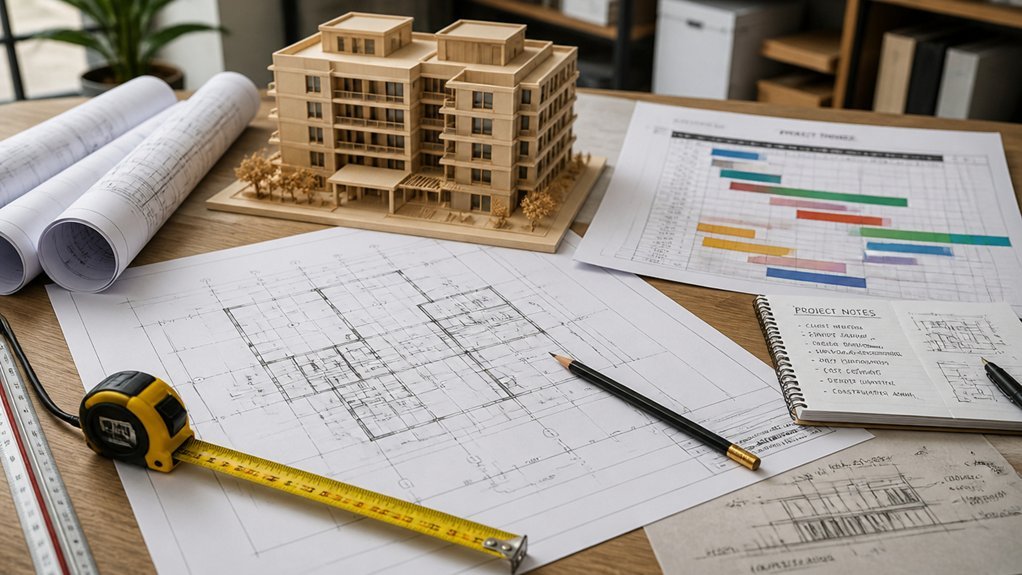
A solid construction project management plan acts as the backbone of any successful build. It brings teams together, keeps spending in check, and helps avoid costly setbacks. Getting the structure right from day one makes all the difference between a smooth project and one that spirals out of control.
Start by drawing clear boundaries around the project scope. Everyone needs to know exactly what’s included and what isn’t. From there, build out realistic timelines using critical path analysis to spot which tasks can derail everything if they slip.
Money matters just as much as scheduling. Set detailed budgets with built-in contingency reserves for the unexpected costs that always seem to pop up. Pair this with clearly defined roles so each person knows their responsibilities without confusion or overlap.
When these pieces fit together properly, projects stay on track. Skip any of them and you’re likely facing scope creep, blown budgets, and teams that stop talking to each other. The upfront effort pays off every time.
Define Your Project Scope, Objectives, and Deliverables
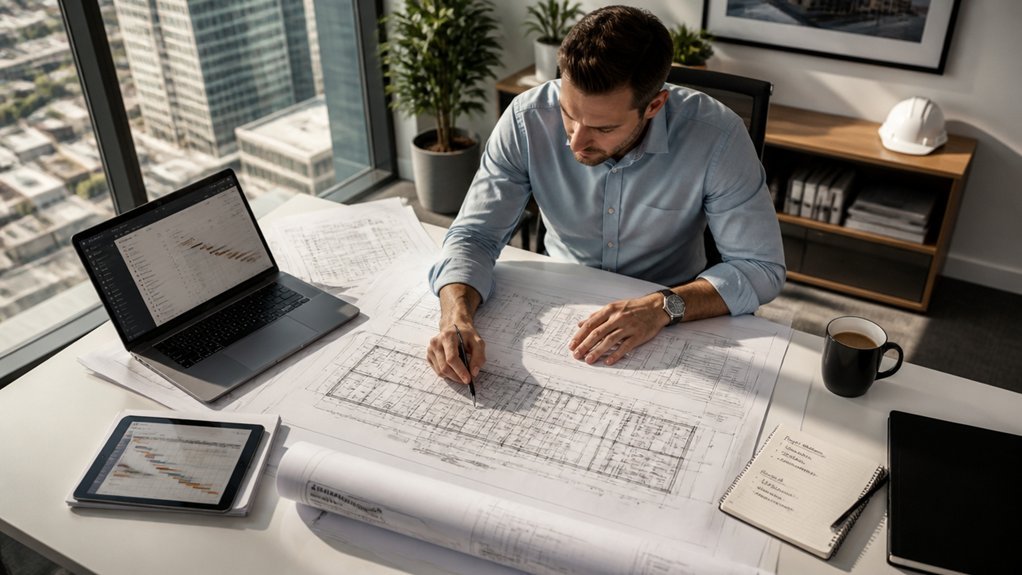
Every construction project requires a clear foundation, one that outlines what work will be completed, why it matters, and what results the client expects to receive.
Project scope defines boundaries, specifying included tasks like foundation work, framing, electrical installation, and excluded items such as landscaping.
Objectives establish measurable goals, including completion dates, budget limits, and quality standards.
Deliverables identify concrete outputs: completed building systems, inspection reports, final documentation. Teams document these elements in writing, preventing misunderstandings about expectations.
Clear definitions reduce scope creep, control costs, and establish accountability. Without this foundation, projects encounter delays, budget overruns, and client dissatisfaction.
Create a Realistic Timeline and Critical Path Schedule
A realistic timeline and critical path schedule form the backbone of construction project management, transforming abstract deadlines into actionable sequences of work. Project managers identify dependencies between tasks, determining which activities must occur sequentially and which can happen simultaneously.
For example, foundation work precedes framing, while electrical rough-in can occur alongside drywall installation.
The critical path represents the longest sequence of dependent tasks, directly affecting project completion. Managers allocate resources, account for weather delays, and build buffer time for unexpected issues.
Regular schedule updates guarantee the project stays on track, preventing costly overruns and maintaining stakeholder confidence.
Allocate Your Budget and Assign Resources Wisely
With the timeline and critical path established, project managers must now distribute financial resources and personnel across the construction phases.
Budget allocation requires identifying costs for materials, labor, equipment, and contingencies. Managers assign skilled workers to critical tasks, ensuring experienced personnel handle complex operations like structural work or electrical installations.
Equipment resources get scheduled based on availability and project phases. Regular cost tracking against the budget prevents overruns.
Contingency reserves, typically ten to twenty percent of total budget, address unexpected expenses. Resource allocation balances project needs with financial constraints, maintaining efficiency while preventing shortages that could delay completion.
Keep Everyone on the Same Page: Roles, Reporting, and Updates
Clear communication structures form the backbone of construction project success, requiring defined roles, consistent reporting systems, and regular updates across all team members.
Project managers should establish specific responsibilities for supervisors, foremen, and crews, preventing overlap and confusion.
Weekly progress reports document completed tasks, upcoming work, and potential delays.
Daily toolbox talks address safety concerns and schedule changes.
Status meetings bring key stakeholders together to review timelines and budgets.
Documentation systems, whether digital platforms or printed logs, create accountability records.
When everyone understands their duties and receives timely information, conflicts decrease, productivity increases, and projects stay aligned with original plans and deadlines.
Identify Risks and Develop Mitigation Plans
Every construction project faces potential obstacles, ranging from weather delays and material shortages to equipment failures and labor disputes. Project managers should systematically identify these risks early, documenting their likelihood and potential impact on timelines and budgets.
Common mitigation strategies include securing backup suppliers for critical materials, scheduling weather-sensitive work during favorable seasons, and maintaining equipment maintenance schedules.
Contingency funds, typically five to ten percent of project costs, provide financial buffers for unexpected expenses.
Regular risk assessments throughout the project lifecycle allow teams to adjust strategies as conditions change.
Clear communication of risks and mitigation plans guarantees all stakeholders understand potential challenges and prepared responses.
Track Progress Against Schedule and Budget
Monitoring project performance requires consistent comparison of actual progress against planned timelines and allocated budgets. Project managers track spending, labor hours, material costs, and completion percentages weekly.
They document delays caused by weather, supply shortages, or workforce issues. Software tools like Microsoft Project or Procore record expenditures and schedule variances automatically.
Regular reports identify cost overruns before they escalate notably. When actual expenses exceed budgeted amounts by ten percent or more, managers implement corrective actions. These adjustments might include reallocating resources, adjusting timelines, or requesting budget modifications from stakeholders.
Accurate tracking guarantees projects remain financially viable and meet contractual deadlines.
Choose PM Tools and Templates That Fit Your Project
How should a project manager select software and templates that match project requirements? Project managers should evaluate tools based on project size, budget, and complexity.
Small projects may use basic spreadsheets or Asana, while larger ones require robust platforms like Procore or Microsoft Project.
Templates should address specific needs: scheduling templates for timeline management, budget templates for cost tracking, and risk registers for potential issues.
Managers must consider team familiarity, integration capabilities with existing systems, and scalability. Selecting appropriate tools reduces administrative burden, improves communication, and enables accurate progress monitoring throughout the construction project lifecycle.
Frequently Asked Questions
What Are the Legal Permits and Licenses Required Before Starting Construction?
Construction projects require building permits, zoning approvals, environmental clearances, and contractor licenses. Specific requirements depend on project scope, location, and local regulations. Professionals must verify requirements with municipal authorities before commencing work.
How Do We Handle Unexpected Weather Delays and Their Impact on Scheduling?
Studies show weather causes approximately 23% of construction delays annually. Project managers mitigate weather impacts by building contingency buffers into timelines, monitoring forecasts closely, adjusting crew schedules accordingly, and maintaining flexible resource allocation to maintain productivity despite adverse conditions.
What Safety Protocols and Compliance Requirements Must Be Implemented On-Site?
Project managers must establish thorough on-site safety protocols including hazard assessments, worker training, proper equipment usage, and regular inspections. OSHA regulations, local building codes, and insurance requirements dictate mandatory compliance documentation, accident reporting procedures, and continuous safety monitoring throughout construction phases.
How Should We Manage Client Change Orders and Scope Modifications Mid-Project?
In this modern age of typewriter efficiency, project managers must establish a formal change order process requiring written documentation, cost-benefit analysis, and stakeholder approval before implementation. Regular scope reviews prevent unauthorized modifications and maintain project timeline and budget integrity throughout execution.
What Insurance Coverage and Bonding Requirements Are Necessary for the Project?
Construction projects require general liability insurance, workers’ compensation coverage, and project-specific bonding. Contractors must maintain performance bonds, payment bonds, and bid bonds as mandated by contract terms and local regulations. Requirements vary by project scope and client specifications.
Conclusion
A construction project management plan functions like a blueprint for a building—without it, chaos replaces order. Effective planning requires defining scope, establishing timelines, allocating budgets, clarifying roles, evaluating risks, and tracking progress. PM tools streamline these processes. By implementing these fundamental elements systematically, project managers reduce delays, control costs, and deliver results. Success depends on treating planning as essential infrastructure, not optional overhead.