
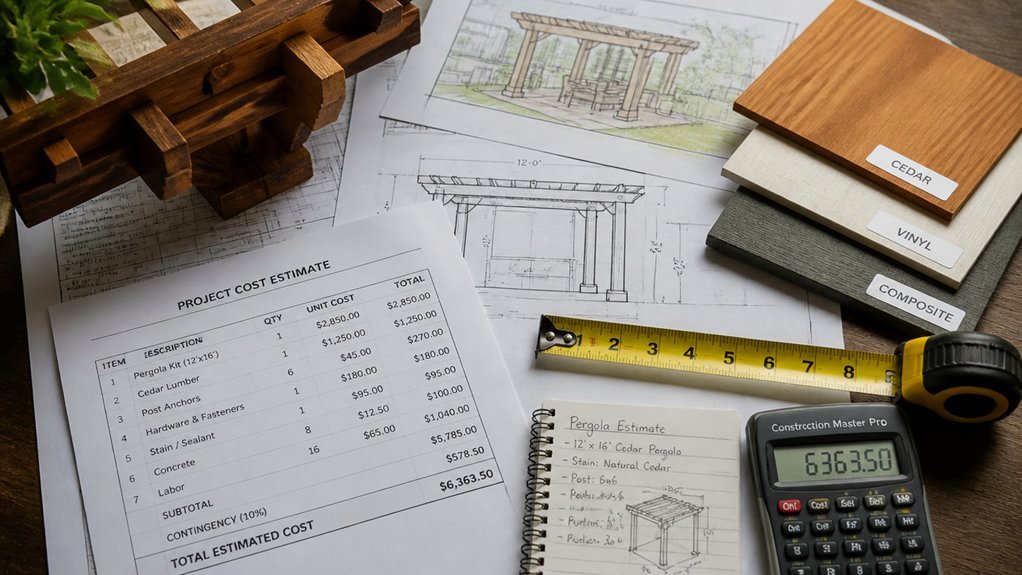
Planning a pergola project starts with a realistic look at material expenses. Wood remains popular for its classic appearance, while metal and vinyl offer durability with less maintenance. Most homeowners spend between $3,000 and $12,000 on materials alone, depending on size and quality.
Skilled labor represents another significant investment. Professional installation typically runs $1,500 to $5,000, though complex designs or challenging sites may push this higher. It pays to get multiple quotes from contractors before making a decision.
Hidden costs often catch people off guard. Permits, site preparation, and utility marking can quietly add 10 to 20 percent to the final bill. Factoring in these variables early prevents budget surprises and keeps your project on track financially.
Material Costs: Wood, Metal, and Vinyl Comparison
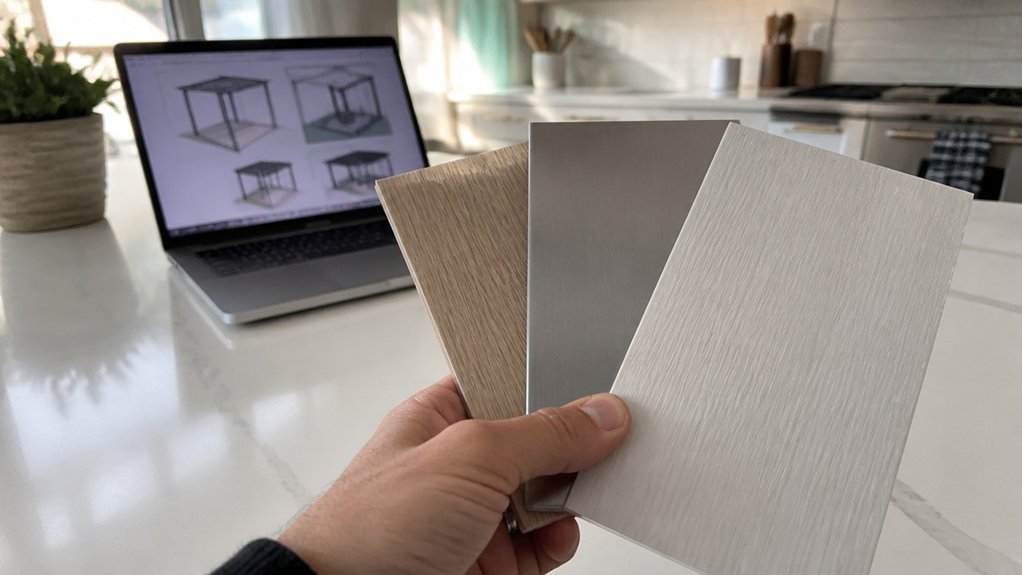
The material selection markedly affects pergola construction expenses, with three primary options dominating the market: wood, metal, and vinyl.
Wood pergolas, typically cedar or pressure-treated lumber, cost between $3,000 and $8,000 for standard sizes, offering natural aesthetics but requiring regular maintenance.
Metal structures, usually aluminum or steel, range from $4,000 to $10,000, providing durability and minimal upkeep.
Vinyl pergolas represent the premium option, costing $5,000 to $12,000, with superior weather resistance and longevity.
Regional material availability influences pricing considerably.
Budget considerations should account for installation complexity, local labor rates, and long-term maintenance requirements when comparing these three material categories.
Labor Fees: What Installation Actually Costs
Installation costs represent a substantial portion of overall pergola expenses, often equaling or exceeding material costs depending on project complexity.
Labor fees typically range from $1,500 to $5,000 for standard residential projects. Factors affecting pricing include site preparation, foundation work, local wage rates, and structural complexity.
Simple attached pergolas cost less than freestanding structures requiring concrete footings. Contractors charge hourly rates between $50 and $100, or provide flat project quotes.
Additional expenses arise from electrical work, permit acquisition, and site cleanup.
Obtaining multiple estimates from licensed contractors helps establish accurate budget expectations and guarantees competitive pricing.
Size and Design: How They Impact Your Budget
Pergola dimensions and structural design directly determine material quantities and labor requirements, making them primary cost drivers alongside installation complexity. A 10-by-12-foot pergola costs considerably less than a 20-by-20-foot structure, requiring fewer lumber pieces, fasteners, and installation hours.
Design choices, including roof style, beam spacing, and decorative elements, further influence expenses. Open lattice designs cost less than solid roofs. Materials needed scale with footprint size. Labor time increases with height, foundation requirements, and customization details.
Homeowners should measure their space precisely and select designs matching their budget constraints before obtaining contractor quotes.
Hidden Costs You’ll Encounter: Permits and Site Prep
Beyond material and labor expenses, homeowners typically encounter additional costs that greatly impact total pergola budgets. Permits, required in most municipalities, range from $50 to $500 depending on location and project scope.
Site preparation costs include clearing vegetation, leveling ground, and removing obstacles, often running $200 to $1,000.
Soil testing may be necessary for foundation stability, adding $300 to $800. Utility marking services, which locate underground pipes and electrical lines, typically cost $100 to $250.
These hidden expenses often represent 10 to 20 percent of total project costs, making advance planning essential for accurate budgeting.
DIY or Hire Out? What Each Path Costs
How much can homeowners save by constructing a pergola themselves rather than hiring professionals?
DIY construction typically costs 40-60% less than hiring contractors. Material expenses range from $1,500 to $5,000, depending on size and wood quality. Professional installation adds $2,000 to $8,000 in labor costs.
DIY requires tools, time, and basic carpentry skills. Homeowners should evaluate their ability to handle foundation work, cutting, and assembly. Mistakes can increase expenses considerably.
Hiring professionals guarantees quality, warranty protection, and proper permits. The choice depends on budget constraints, available time, and skill level.
Where You Live Affects Price
Geographic location markedly influences pergola construction costs, with regional differences affecting material prices, labor rates, and building code requirements. Urban areas typically charge higher labor fees than rural regions, sometimes 20-30% more per hour.
Material costs vary by region; lumber prices differ between coastal and inland locations. Northern climates demand stronger structures to withstand snow loads, increasing expenses. Southern areas may require additional ventilation considerations.
Building permits and inspections cost differently across jurisdictions. Homeowners should research local contractor rates, material suppliers, and permit fees specific to their area before budgeting for pergola projects.
Build Your Final Budget With Contingency
Once homeowners understand regional pricing factors, they need to compile all cost elements into a single budget figure, then add extra funds for unexpected expenses. A standard contingency reserve ranges from ten to twenty percent of the total project cost.
For example, a pergola budgeted at five thousand dollars requires five hundred to one thousand dollars in contingency funds. This buffer covers material price increases, labor complications, and site-specific challenges.
Homeowners should document all estimates, labor quotes, and material prices. Recording these figures in a spreadsheet guarantees accuracy. The final budget becomes the realistic spending limit for the entire pergola construction project.
Frequently Asked Questions
How Long Does a Typical Pergola Installation Take From Start to Finish?
A typical pergola installation generally takes between two to five days to complete, depending on the structure’s size and complexity. Simple designs may require only a weekend, while larger, custom pergolas with intricate details could extend to two weeks or longer.
What’s the Average Lifespan of a Pergola Before Needing Replacement or Repairs?
A pergola’s lifespan typically ranges from 15 to 25 years, depending on material choice and maintenance frequency. Wood structures require regular staining and sealing, while vinyl and metal options demand minimal upkeep, potentially extending their durability considerably.
Do Pergolas Require Ongoing Maintenance, and What Does That Cost Annually?
Studies show pergolas require annual maintenance costing $200-$500. Regular upkeep includes staining, sealing, and inspecting for damage. Without proper care, deterioration accelerates markedly. These preventative investments protect structural integrity and extend the pergola’s functional lifespan considerably.
Can I Add Features Like Roof Panels or Shade Cloth Later?
Yes, roof panels or shade cloth can be added to an existing pergola later. However, retrofitting may require structural reinforcement and additional hardware installation, potentially increasing costs compared to including these features during initial construction.
What Financing Options Are Available for Larger Pergola Projects?
Homeowners drowning in pergola dreams can explore numerous financing avenues. Options include home equity loans, personal loans, contractor financing programs, and credit cards. Many suppliers offer zero-interest installment plans for projects exceeding certain amounts, making ambitious outdoor structures surprisingly accessible.
Conclusion
Estimating pergola costs requires examining materials, labor, permits, and site preparation systematically. Wood runs $3,000 to $12,000, with labor adding $1,500 to $5,000. Hidden expenses like permits account for 10 to 20 percent extra. Regional location, design complexity, and size markedly influence final pricing. Before breaking ground, homeowners must weigh DIY savings against professional expertise. Building a contingency fund of 15 to 20 percent prevents budget overruns. Accurate estimates demand gathering multiple quotes, comparing options, and planning thoroughly.